How Much Are You Really Saving? The Hidden Math Behind Online Discounts

You see “50% OFF” in bold red and instantly feel like you’re saving money – but are you really? Most online discounts are calculated using the listed “original price,” and that number is often inflated to make deals appear bigger than they actually are. The hidden math behind discounts reveals that real savings depend on the actual market price, not the crossed-out number retailers want you to focus on. Before you trust a sale label, learn how to spot the difference between a real discount and a fake one — because the biggest discount doesn’t always mean the best deal.
“I Keep Falling for Discounts” – How Can I Stop That?

Ever opened a shopping app “just to browse” and ended up buying something because it was 70% off? You’re not alone. Falling for discounts isn’t simply a lack of discipline — modern online stores are carefully designed to trigger impulse buying through urgency, fear of missing out, and psychological pricing tricks. The good news is that once you understand the psychology behind discounts, you can stop emotional purchases before they happen. Learning a few smart shopping habits can help you avoid unnecessary spending and finally break the cycle of buying things you never planned to purchase.
A 10-Second Trick to Know If a Discount Is Actually Worth It
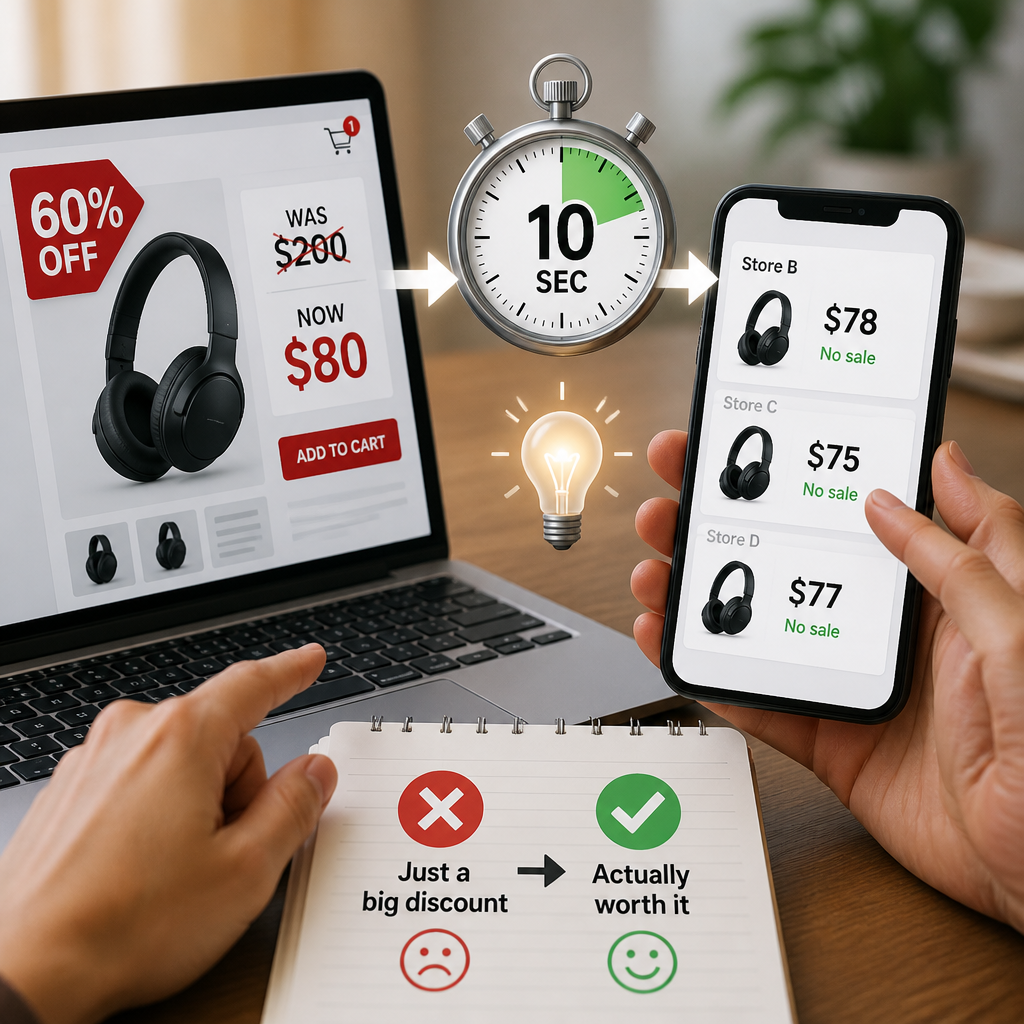
Most online discounts look impressive because retailers want you to focus on the percentage — not the actual value. A “70% OFF” label can trigger excitement instantly, even when the final price is no better than what the product normally sells for elsewhere. The good news is that there’s a simple 10-second trick smart shoppers use to avoid fake deals: ignore the discount percentage and compare the final price with the product’s real market price. One quick check can help you spot misleading sales, avoid overpaying, and make smarter shopping decisions online.
Best Times to Buy: How Prices Change During Sales Seasons and Flash Deals

Most online discounts look impressive because retailers want you to focus on the percentage — not the actual value. A “70% OFF” label can trigger excitement instantly, even when the final price is no better than what the product normally sells for elsewhere. The good news is that there’s a simple 10-second trick smart shoppers use to avoid fake deals: ignore the discount percentage and compare the final price with the product’s real market price. One quick check can help you spot misleading sales, avoid overpaying, and make smarter shopping decisions online.
How to Compare Products Properly: Price, Quality, and Long-Term Value Explained

Most shoppers compare prices. Far fewer compare actual value — and that’s where bad buying decisions usually happen. A product that looks cheaper upfront can end up costing far more through poor durability, hidden fees, frequent replacements, or weak performance over time. This guide explains how to compare products properly by looking beyond the price tag and evaluating quality, lifespan, warranty, hidden costs, and true long-term value. Learn how smarter comparisons help you spend less, avoid fake savings, and make better purchasing decisions every time.
Coupon Stacking Explained: A Step-by-Step Guide to Combining Discounts

Coupon stacking is one of the smartest ways to cut online shopping costs without waiting for deeper sales. By combining promo codes, cashback rewards, loyalty points, and credit card offers in the right order, shoppers can reduce the final price far beyond a standard discount. This step-by-step guide explains how coupon stacking works, which discount combinations are allowed, common mistakes that block savings, and practical strategies to maximize online discounts legally and efficiently.