June 13, 2026 4:39 am
GST, VAT & Sales Tax: The Business Owner’s Complete Calculation Guide
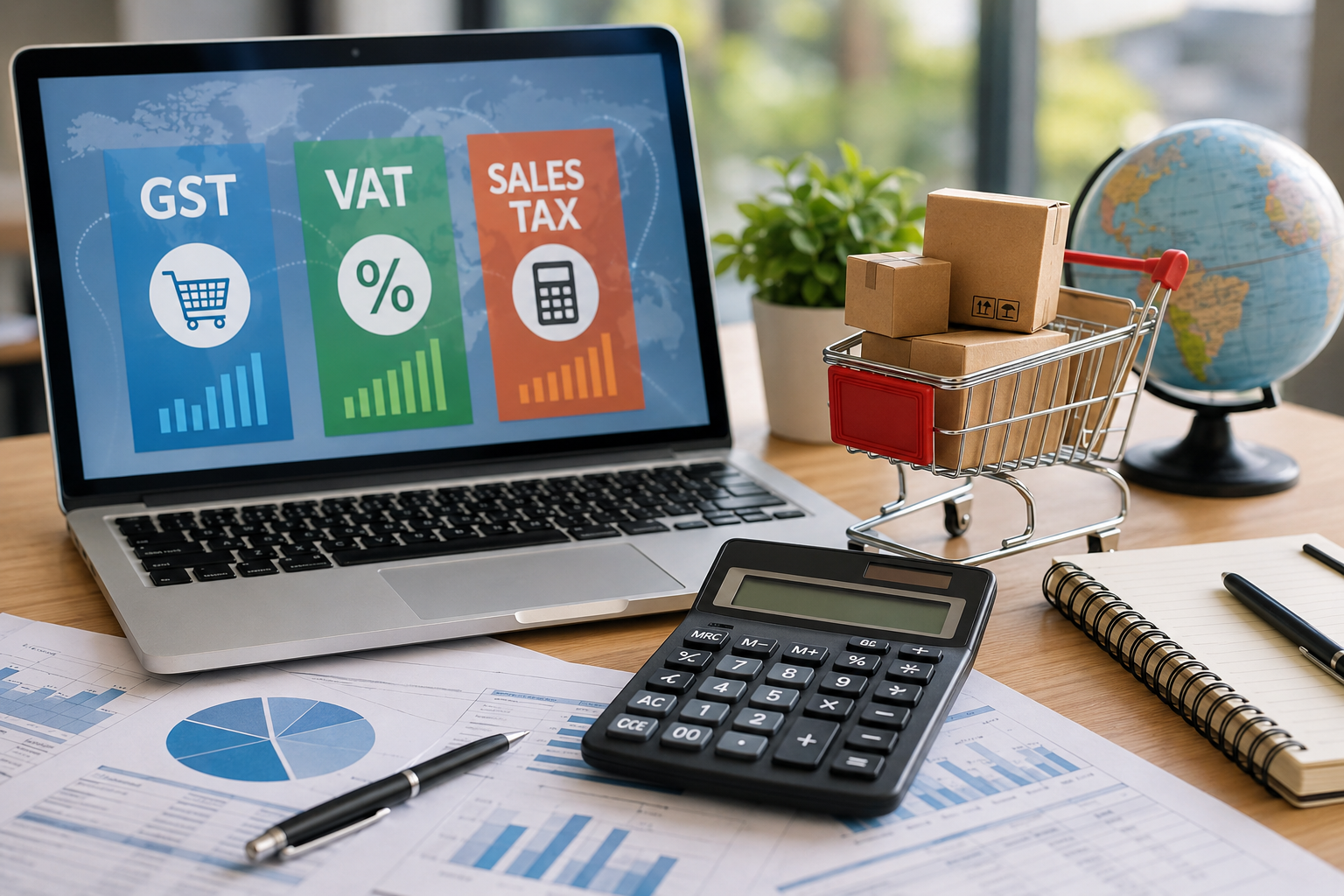
GST, VAT, and Sales Tax — three tax systems, three sets of rules, and one big source of confusion for business owners worldwide. Getting them wrong means mispriced products, compliance penalties, and cash flow surprises. This guide breaks down how each system works, explains the exact calculation formulas with real numbers, and shows how a tax calculator makes accurate pricing effortless.
This guide explains how deductions, exemptions, and credits can significantly lower your taxable income and overall tax burden. It also highlights how a tax calculator becomes a powerful planning tool, helping you compare scenarios, identify hidden savings, and make informed investment decisions before filing your return. By combining smart deduction strategies with real-time calculations, you can ensure you only pay what is truly required - and not a rupee more.
If you’ve ever stared at an invoice wondering whether the tax was already included in the price or panicked before filing because you weren’t sure which rate applied to which product you’re not alone. Indirect taxes are one of the most consistently confusing aspects of running a business, and the confusion costs real money.
GST, VAT, and Sales Tax are three different systems for taxing goods and services and depending on where you sell, who you sell to, and what you sell, you may be dealing with one, two, or all three simultaneously. Getting them wrong means mispriced products, incorrect filings, unhappy customers, and potential penalties.
This guide breaks down each tax system in plain language, explains exactly how calculations work with real numbers, and shows how a tax calculator transforms what used to be a confusing manual process into a reliable, repeatable system – so you can focus on running your business instead of second-guessing your pricing.
Understanding Indirect Taxes in Simple Terms
Before comparing the three systems, it helps to understand what they have in common: all three are indirect taxes – meaning the tax is ultimately paid by the end consumer, but collected and remitted to the government by businesses along the way. The difference lies in how and where in the supply chain that collection happens.
What Is GST?
GST – Goods and Services Tax – is a single, unified tax applied to the supply of most goods and services. It replaces a fragmented system of multiple indirect taxes (excise duty, service tax, VAT at different stages) with one consistent tax structure applied across the entire supply chain.
Countries using GST include India, Australia, Canada, Singapore, and New Zealand, among others. In India, GST operates as a dual structure: CGST (Central GST) and SGST (State GST) for intra-state sales, and IGST (Integrated GST) for inter-state transactions.
The defining feature of GST is the input tax credit (ITC) mechanism. Businesses registered under GST can claim back the GST they paid on purchases (inputs) against the GST they collect on sales (output). This prevents tax-on-tax cascading – each business in the chain only effectively pays tax on the value they added.
What Is VAT?
VAT – Value Added Tax – operates on a similar principle to GST: it is charged at each stage of production and distribution, with businesses claiming input credits for tax already paid. The end consumer bears the full tax burden, while businesses act as collection points for the government.
VAT is the dominant indirect tax system in Europe, the UK, and much of Africa and Latin America. EU VAT rates vary by country and product category – standard rates typically range from 17% to 27%, with reduced rates for essentials like food and medicine.
The key characteristic of VAT is its multi-stage structure. A raw material supplier charges VAT; a manufacturer pays it and claims it back; a retailer does the same. At every stage, the net tax paid reflects only the value added at that stage. The government receives tax revenue continuously rather than at a single point.
What Is Sales Tax?
Sales Tax is simpler in structure but more complex in execution – particularly in the United States, where it is the primary indirect tax system. Unlike GST and VAT, Sales Tax is charged only at the final point of sale to the end consumer. Businesses in the supply chain do not charge or reclaim tax on intermediate transactions.
The critical complication with Sales Tax is that it is set at the state and local level in the US, meaning rates vary significantly by location. There are over 10,000 distinct tax jurisdictions across the country. A business selling in multiple states must track and apply the correct rate for each – which is why Sales Tax compliance for e-commerce businesses is particularly demanding.
GST vs VAT vs Sales Tax – Key Differences
Understanding the structural differences between these three systems is essential for businesses operating across borders or managing multi-channel sales.
Tax Collection Process
GST and VAT are both multi-stage taxes – collected at every point in the supply chain from manufacturer to retailer. Sales Tax is a single-stage tax collected only at the final consumer sale. This means GST and VAT require ongoing documentation and credit claims throughout the supply chain; Sales Tax requires only the final seller to collect and remit.
Who Pays and Who Collects
In all three systems, the economic burden ultimately falls on the consumer – but businesses are legally responsible for collection and remittance. Under GST and VAT, every registered business in the chain is both a tax collector (on sales) and a tax payer (on purchases), with the net liability being the difference. Under Sales Tax, only the final retailer collects from the consumer; upstream transactions are tax-free.
Input Tax Credits
GST and VAT both offer input tax credits – businesses can offset the tax they paid on inputs against the tax they collect on outputs. This eliminates the “cascading” effect where tax is charged on top of previously taxed value. Sales Tax systems generally do not offer input credits – though most states provide reseller exemptions so that intermediate businesses don’t pay Sales Tax on goods purchased for resale.
Administrative Complexity
VAT systems tend to carry the highest administrative load due to varied rates across product categories and the need for detailed invoicing at every supply chain stage. GST (particularly India’s system) is moderately complex due to dual CGST/SGST/IGST structure and HSN code requirements. US Sales Tax is simple in concept but demanding in practice due to multi-jurisdiction compliance for businesses operating across states.
International Usage
| Feature | GST | VAT | Sales Tax |
|---|---|---|---|
| Tax Stage | Multiple stages | Multiple stages | Final sale only |
| Input Tax Credit | Yes | Yes | Generally No |
| Administrative Complexity | Medium | High | Low (but multi-jurisdiction) |
| Common Regions | India, Australia, Singapore, Canada | Europe, UK, Africa | USA, some developing nations |
| Rate Structure | Slab-based (India: 0%, 5%, 12%, 18%, 28%) | Variable by country and category | Variable by state/county/city |
| Cross-Border Handling | IGST for inter-state | Reverse charge mechanism | Nexus-based rules |
Why Understanding Tax Calculations Matters for Businesses
Many business owners treat tax calculations as an afterthought – something to sort out at filing time. This is one of the most expensive habits in business finance.
Accurate Product Pricing
Incorrect tax calculations mean your prices are either too high (losing customers to competitors) or too low (eating into your margins or undercharging tax that you still owe the government). Both outcomes hurt profitability. Getting pricing right from the start – with tax correctly included or excluded based on your market – protects margin and maintains competitiveness.
Better Profit Margin Management
When you don’t separate tax from revenue clearly, your profit figures are distorted. The tax you collected isn’t income – it’s a liability owed to the government. Businesses that fail to account for this accurately often face cash flow crises when tax payments come due because the money has been treated as operating revenue.
Improved Financial Forecasting
Accurate tax calculations feed directly into accurate cash flow projections. If you know your effective tax rate on every product category and your expected sales volume, you can forecast your tax liability monthly – and plan your cash reserves accordingly instead of scrambling at filing time.
Reduced Compliance Risks
Filing incorrect tax amounts – even accidentally – can trigger audits, penalties, and interest charges. Consistent, correct calculation from the point of sale forward creates a clean audit trail and reduces the risk of costly compliance errors.
Enhanced Customer Transparency
Customers increasingly want to see clear pricing. In markets where tax-inclusive pricing is expected (most of Europe, Australia, India for B2C), displaying prices without tax and adding it at checkout creates friction and mistrust. In markets where tax-exclusive is standard (US, B2B sales), the reverse applies. Understanding the convention for your market and pricing accordingly builds customer confidence.
How a Tax Calculator Simplifies GST, VAT, and Sales Tax Calculations
What Is a Tax Calculator?
A tax calculator is a digital tool that automates the computation of indirect taxes on product prices. You input the base price (or tax-inclusive price) and the applicable tax rate, and the calculator instantly returns the tax amount, the final price, and the breakdown – without manual calculation.
For businesses managing multiple product categories, different regional rates, or both tax-inclusive and tax-exclusive pricing, a good tax calculator is not a convenience – it’s a necessity.
Benefits of Automated Tax Calculations
The core benefit is speed without error. A calculation that takes a human 30–60 seconds with a risk of mistakes takes a calculator under a second with zero risk of arithmetic error. Multiply that across hundreds of daily transactions, and the time saved is significant – as is the reduction in costly mistakes.
Beyond speed, calculators enable scenario planning: you can see instantly how a 2% rate change affects your pricing or margin, compare tax-inclusive vs. tax-exclusive presentation, or check the exact tax on any transaction before confirming it.
Avoiding Manual Calculation Errors
The most common manual calculation error is applying the percentage incorrectly. Many people calculate 18% GST on ₹1,000 correctly (₹180) but then make errors when reverse-calculating from a tax-inclusive price — using 18% of the inclusive price rather than the correct formula. A calculator eliminates this category of error entirely.
Saving Time for Business Owners
For a small business owner managing product listings, customer invoices, purchase orders, and quarterly filings, every minute saved on routine calculations is a minute available for higher-value work. Tax calculators also reduce dependence on an accountant for basic day-to-day pricing decisions.
How to Calculate GST Using a Calculator
GST Calculation Formula
The two GST formulas every business needs:
Tax-Exclusive (adding GST to a base price):
GST Amount = Base Price × (GST Rate ÷ 100) Final Price = Base Price + GST Amount
Tax-Inclusive (finding GST within an already-inclusive price):
GST Amount = Inclusive Price × GST Rate ÷ (100 + GST Rate) Base Price = Inclusive Price − GST Amount
Tax-Exclusive GST Example
A retailer sells a product at a base price of ₹2,000 with 18% GST.
- GST Amount = ₹2,000 × 18/100 = ₹360
- Final Price = ₹2,000 + ₹360 = ₹2,360
The customer pays ₹2,360. The retailer remits ₹360 to the government (less any input tax credits).
Tax-Inclusive GST Example
A product is listed at ₹2,360 inclusive of 18% GST. What is the base price and the GST amount?
- GST Amount = ₹2,360 × 18 ÷ (100 + 18) = ₹2,360 × 18 ÷ 118 = ₹360
- Base Price = ₹2,360 − ₹360 = ₹2,000
This reverse calculation is where manual errors are most common — and where a tax calculator pays for itself immediately.
Common GST Mistakes Businesses Make
Using the wrong HSN/SAC code: Different goods and services attract different GST rates (0%, 5%, 12%, 18%, 28%). Applying the wrong rate due to an incorrect code creates both pricing errors and compliance issues.
Confusing CGST+SGST with IGST: For intra-state sales, GST splits into equal CGST and SGST portions. For inter-state, it’s a single IGST charge. Invoices must reflect the correct structure.
Reverse-calculating GST from inclusive prices incorrectly: As shown above, the formula is GST Rate ÷ (100 + GST Rate), not simply GST Rate ÷ 100. This error consistently produces understated GST amounts.
Tax Calculator
A Tax Calculator helps you estimate your tax liability, identify potential deductions, and plan your finances with greater accuracy.
How to Calculate VAT Using a Calculator
VAT Calculation Formula
VAT uses the same mathematical structure as GST:
Adding VAT (tax-exclusive):
VAT Amount = Net Price × (VAT Rate ÷ 100) Gross Price = Net Price + VAT Amount
Removing VAT (tax-inclusive):
VAT Amount = Gross Price × VAT Rate ÷ (100 + VAT Rate) Net Price = Gross Price ÷ (1 + VAT Rate ÷ 100)
Adding VAT to Product Prices
A UK retailer sells a product at a net price of £500 with 20% VAT.
- VAT Amount = £500 × 20/100 = £100
- Gross Price = £500 + £100 = £600
The customer pays £600. The retailer remits £100 to HMRC (less input VAT already paid on purchases).
Removing VAT from Inclusive Prices
A product is listed at £600 including 20% VAT. What is the net price?
- VAT Amount = £600 × 20 ÷ 120 = £100
- Net Price = £600 − £100 = £500
VAT Examples for Retailers
A clothing retailer in Germany purchases inventory at €10,000 + 19% VAT (€1,900 input VAT paid) and sells it for €18,000 + 19% VAT (€3,420 output VAT collected).
- Net VAT payable to government = €3,420 − €1,900 = €1,520
This input credit mechanism is what distinguishes VAT (and GST) from Sales Tax – the retailer pays VAT only on the value they added (€8,000), not the full sale price.
How to Calculate Sales Tax Using a Calculator
Sales Tax Formula
Sales Tax is always added at the point of final sale – there is no multi-stage collection or input credit system.
Sales Tax Amount = Sale Price × (Sales Tax Rate ÷ 100) Total Price = Sale Price + Sales Tax Amount
Point-of-Sale Tax Calculation Example
A customer buys a laptop in California for $1,200 with a combined state and local Sales Tax of 9.25%.
- Sales Tax = $1,200 × 9.25/100 = $111
- Total at checkout = $1,200 + $111 = $1,311
The retailer collects $111 and remits it to the relevant state and local tax authorities. The $1,200 is entirely the retailer’s revenue; Sales Tax is collected on behalf of the government.
Multi-State E-Commerce Tax Considerations
The 2018 Supreme Court ruling in South Dakota v. Wayfair established economic nexus – meaning online sellers must collect Sales Tax in states where they exceed certain sales thresholds (typically $100,000 in sales or 200 transactions per year), even without a physical presence.
This means a US-based e-commerce store selling nationally may need to register, calculate, and remit Sales Tax in dozens of states simultaneously – each with different rates, product exemptions, and filing deadlines. This is why Sales Tax automation tools are essential for e-commerce at scale.
Common Sales Tax Challenges
Product taxability varies by state: Food, clothing, medicine, and digital goods are exempt in some states and taxable in others. Getting this wrong in either direction creates either overcharging customers or underpaying the government.
Local rates stack on top of state rates: California’s base state rate is 6%, but local district taxes push the effective rate to 7.25%–10.25% depending on the county or city. Always use the combined rate for the customer’s specific location.
Destination vs. origin sourcing: Some states tax based on where the seller is located; most use where the buyer is located. Knowing which rule applies in each state is essential for correct calculation.
Tax-Inclusive vs Tax-Exclusive Pricing Explained
What Is Tax-Exclusive Pricing?
Tax-exclusive pricing (also called net pricing) displays the base price of a product before tax is applied. The tax is calculated and shown separately – typically at checkout or on an invoice. The final amount the customer pays is the base price plus the applicable tax.
This is standard in B2B transactions globally, in the United States for retail, and in many professional service contexts where clients expect to see base charges and taxes itemized.
Example: Product listed at $500 + $45 (9% Sales Tax) = $545 total.
What Is Tax-Inclusive Pricing?
Tax-inclusive pricing (also called gross pricing) displays the final price the customer pays, with tax already embedded. The customer sees one number; the tax portion is contained within it.
This is mandatory for B2C retail in most countries using GST or VAT – including India, Australia, the UK, and throughout the EU. The logic is consumer transparency: the price you see is the price you pay.
Example: Product listed at ₹2,360 (inclusive of 18% GST). The customer pays ₹2,360 with no surprise at checkout.
Which Pricing Method Is Better for Businesses?
The right choice depends on your market and customer type:
- B2C in GST/VAT countries: Use tax-inclusive pricing. It’s often legally required and reduces cart abandonment caused by unexpected charges at checkout.
- B2B globally: Use tax-exclusive pricing. Business buyers need the net price for their own accounting and input credit claims.
- US retail: Tax-exclusive is the strong convention; customers expect to see tax added at the register.
Customer Psychology and Tax Display
Research in consumer behavior shows that tax-inclusive pricing reduces checkout abandonment by eliminating the “surprise” of added charges at the final step. For e-commerce stores targeting consumers, displaying the all-inclusive price prominently – and noting “inclusive of all taxes” – builds trust and reduces hesitation. For B2B or professional services, clean net pricing with a separate tax line projects professionalism and facilitates the buyer’s own accounting.
How Indirect Taxes Impact E-Commerce Businesses
Online Store Pricing Strategy
For e-commerce businesses, tax treatment directly affects conversion rates. If you’re selling in India, your listed price must include GST – a product priced at ₹1,000 that adds ₹180 GST at checkout will perform worse than one priced at ₹1,180 inclusive from the start. The final amount is identical; the perception is not.
Marketplace Seller Challenges
Sellers on platforms like Amazon, Flipkart, or Etsy face an additional layer of complexity: many marketplaces now act as tax collection agents, collecting and remitting GST or Sales Tax on behalf of sellers in certain jurisdictions. This doesn’t eliminate your obligation to understand the tax – it means you need to reconcile what the marketplace collected against what you owe to avoid double-counting or gaps in your filing.
International Selling and Cross-Border Taxes
Selling across borders triggers additional tax obligations: import duties, destination-country GST/VAT, and in some cases, digital services taxes. The EU’s OSS (One-Stop Shop) scheme simplifies VAT compliance for sellers to EU consumers. Australia requires non-resident sellers to register for GST once they exceed AUD 75,000 in sales to Australian customers. Understanding the threshold and registration requirements for each market you sell into is non-negotiable for compliant international e-commerce.
Managing Taxes Across Multiple Regions
The practical solution for multi-region sellers is a tax management system that automatically applies the correct rate based on the buyer’s location, product category, and applicable tax regime. Manual management of this across even five or six markets is error-prone and unsustainable. A calculator tool handles rate accuracy per transaction; a full tax compliance platform handles registration, filing, and remittance.
Real-World Examples of Tax Calculations
Retail Store Example
A shoe retailer in India prices a pair of sneakers at a base cost of ₹3,000. GST on footwear above ₹1,000 is 18%.
- GST = ₹3,000 × 18% = ₹540
- Selling price (tax-inclusive) = ₹3,540
The retailer paid GST of ₹270 on their purchase of the shoes from the wholesaler. Their net GST payable = ₹540 − ₹270 = ₹270.
E-Commerce Product Example
A UK-based online store sells a fitness tracker for £120 (tax-exclusive) with 20% VAT.
- VAT = £120 × 20% = £24
- Customer pays £144
Displayed on the product page as: £144.00 inc. VAT (£120.00 + £24.00 VAT)
Wholesale Business Example
A wholesale supplier in Germany sells €50,000 of goods to a retailer (B2B transaction within the EU). With 19% VAT:
- Invoice total = €50,000 + €9,500 VAT = €59,500
The retailer claims the €9,500 as input VAT. The net cost to them remains €50,000. This is exactly how the VAT input credit system prevents tax cascading.
Service-Based Business Example
A freelance digital marketing consultant in India charges ₹80,000 for a project. GST on services is 18%.
- GST = ₹80,000 × 18% = ₹14,400
- Invoice total = ₹94,400
If the client is a GST-registered business, they claim ₹14,400 as input credit. If they’re an unregistered individual, ₹14,400 is their effective cost of the service. The consultant remits the ₹14,400 (less any input credits on their own purchases) to the government.
Common Tax Calculation Mistakes Businesses Should Avoid
Using Incorrect Tax Rates Rates change, exemptions vary by product category, and different jurisdictions apply different rates. A product taxed at 12% GST in one category may be 18% in another. Always verify the current applicable rate for your specific product code before pricing – not once at launch, but periodically.
Ignoring Tax-Inclusive Price Requirements In India, Australia, the UK, and the EU, B2C prices must be displayed inclusive of tax. Displaying net prices and adding tax at checkout isn’t just bad UX – it can be a regulatory violation in some jurisdictions.
Manual Spreadsheet Errors Spreadsheets break. Formulas get overwritten. Copy-paste errors propagate. For any business processing more than a handful of transactions per day, relying on manually maintained spreadsheets for tax calculations is a compliance risk waiting to materialize.
Forgetting Regional Tax Rules A US e-commerce seller who applies their home state’s Sales Tax rate to all orders – instead of the rate applicable to each buyer’s location – may be significantly under-collecting in some states and over-collecting in others. Both create problems.
Misreporting Tax Collections The tax you collect belongs to the government, not to your business. Failing to separate tax collected from business revenue – and misreporting it on returns – is one of the most serious compliance errors a business can make. It must be recorded as a liability from the moment it’s collected.
Choosing the Right Tax Calculator for Your Business
Essential Features to Look For
A useful business tax calculator should support both tax-exclusive and tax-inclusive calculations (adding tax and reverse-calculating it), handle multiple tax rates simultaneously, and present results with a clear breakdown – base price, tax amount, and total separately.
Tax-Inclusive and Exclusive Support
Many basic calculators only add tax to a price – they don’t reverse-calculate the tax component from an inclusive price. For businesses dealing with supplier invoices, marketplace payouts, or retail imports, the reverse calculation is equally essential. Verify that your tool handles both.
Multi-Currency Functionality
For businesses operating internationally or selling across borders, a calculator that handles multiple currencies – and ideally updates exchange rates automatically – eliminates an additional manual step and reduces the risk of currency conversion errors compounding tax errors.
E-Commerce Compatibility
If you’re running an online store, look for tax tools that integrate directly with your platform (Shopify, WooCommerce, Amazon Seller Central) to apply the correct rate automatically at checkout based on the buyer’s location. Manual rate entry for each transaction at e-commerce volumes is not viable.
Ease of Use and Accuracy
A tool that requires a finance degree to operate will be avoided. The best tax calculators are clean, fast, and present results unambiguously. If the output doesn’t clearly show the base price, tax amount, and total price as separate figures, keep looking.
Future Trends in Business Tax Calculations
Automated Tax Compliance
Tax authorities globally are moving toward real-time or near-real-time reporting – India’s e-invoicing mandate for larger businesses, the EU’s VAT in the Digital Age (ViDA) initiative, and the US’s growing state-level e-filing requirements are all pushing in the same direction. The manual, periodic filing model is being replaced by continuous digital compliance infrastructure.
AI-Powered Accounting Tools
AI is being integrated into accounting and tax platforms to automatically classify transactions, flag anomalies, predict tax liabilities, and identify missed deductions or credits. What currently requires a tax professional’s review for complex situations will increasingly be handled automatically – with humans reviewing exceptions rather than performing routine calculations.
Real-Time Tax Estimation
The next generation of e-commerce and POS systems will calculate and display taxes dynamically based on the buyer’s real-time location data, product category, applicable exemptions, and current rates – removing the need for any manual lookup or periodic rate updates.
Global E-Commerce Tax Challenges
As cross-border e-commerce continues to grow, the patchwork of national, state, and local tax rules becomes increasingly untenable for businesses operating at scale. International harmonization efforts – like the OECD’s work on digital services taxes and the EU’s unified VAT reporting – will reshape the compliance landscape. Businesses that build flexible, adaptable tax infrastructure now will be better positioned to absorb those changes.
Final Thoughts
GST, VAT, and Sales Tax are three different answers to the same policy question – how to tax consumption efficiently. Understanding how each system works, where it applies, and how to calculate it correctly isn’t optional for businesses operating in 2026. It’s table stakes.
The good news is that the math itself is straightforward once the concepts are clear. Add tax: multiply by the rate. Remove tax: divide by (1 + rate). The complexity lies in knowing which rate applies, whether to show prices inclusive or exclusive, and how to handle multi-jurisdiction situations – and that’s exactly what a well-designed tax calculator handles.
Businesses that treat tax calculations as an afterthought pay a price: mispriced products, margin erosion, compliance penalties, and cash flow surprises. Businesses that integrate accurate tax calculation into their pricing process from day one operate with cleaner numbers, fewer surprises, and more confidence at filing time.
Start with the right calculator. Understand the rules for your market. Price with intention. The rest follows.
Frequently Asked Questions
All three are indirect taxes on goods and services, but they differ in structure. GST and VAT are collected at multiple stages of the supply chain with input tax credits available at each stage, meaning businesses only pay tax on the value they add. Sales Tax is collected only at the final point of sale to the consumer, with no multi-stage crediting. GST is common in Asia-Pacific countries including India and Australia; VAT dominates Europe; Sales Tax is the primary system in the US.
No single system is objectively better – it depends on where you operate and your business model. GST and VAT systems are more favorable for businesses with significant input costs because the credit mechanism prevents cascading. Sales Tax is simpler per transaction but complex for multi-state operations. For businesses, the relevant question is not which system is “better” but how to operate compliantly and efficiently within whichever system applies to your markets.
Indirect taxes directly affect the final price the customer pays or the margin the business earns, depending on how pricing is structured. If prices are set tax-exclusive and the market expects tax-inclusive, the business either loses margin (absorbing the tax) or surprises customers at checkout (risking cart abandonment). Correct tax treatment must be embedded in pricing decisions from the start.
Retail, e-commerce, wholesale, manufacturing, hospitality, and professional services all benefit substantially. Any business that prices, invoices, or reports regularly – which is every business – benefits from calculation automation. The benefit scales with transaction volume: a business processing 500 invoices per month gains far more from a calculator than one processing five.
How Inflation Is Changing Online Shopping Behavior Worldwide
Popular Right Now
Featured Calculators
Discount Calculator
Enter any original price and a discount percentage to instantly see your final price, exact savings, and whether the deal is genuinely worth it.
Deal Value Checker
Don't just see the % off — get a deal score from 1–10 and a clear verdict: Worth It, Average, or Bad Deal. Stop getting fooled by inflated "original" prices.
About Author

nazneen
Kitchen Chronicles
When it comes to everyday messes, you need a paper towel that’s strong, absorbent, and cost-effective.
Some of Our Top Posts


Populaar Tools

Selected For You
Related Posts
Start Saving Money
in Seconds
Join 10,000+ shoppers using Daily Discount Hub to spend less and live better.
Pick a tool and find out how much you can save right now. Make better spending decisions starting today.