
June 13, 2026 4:22 am
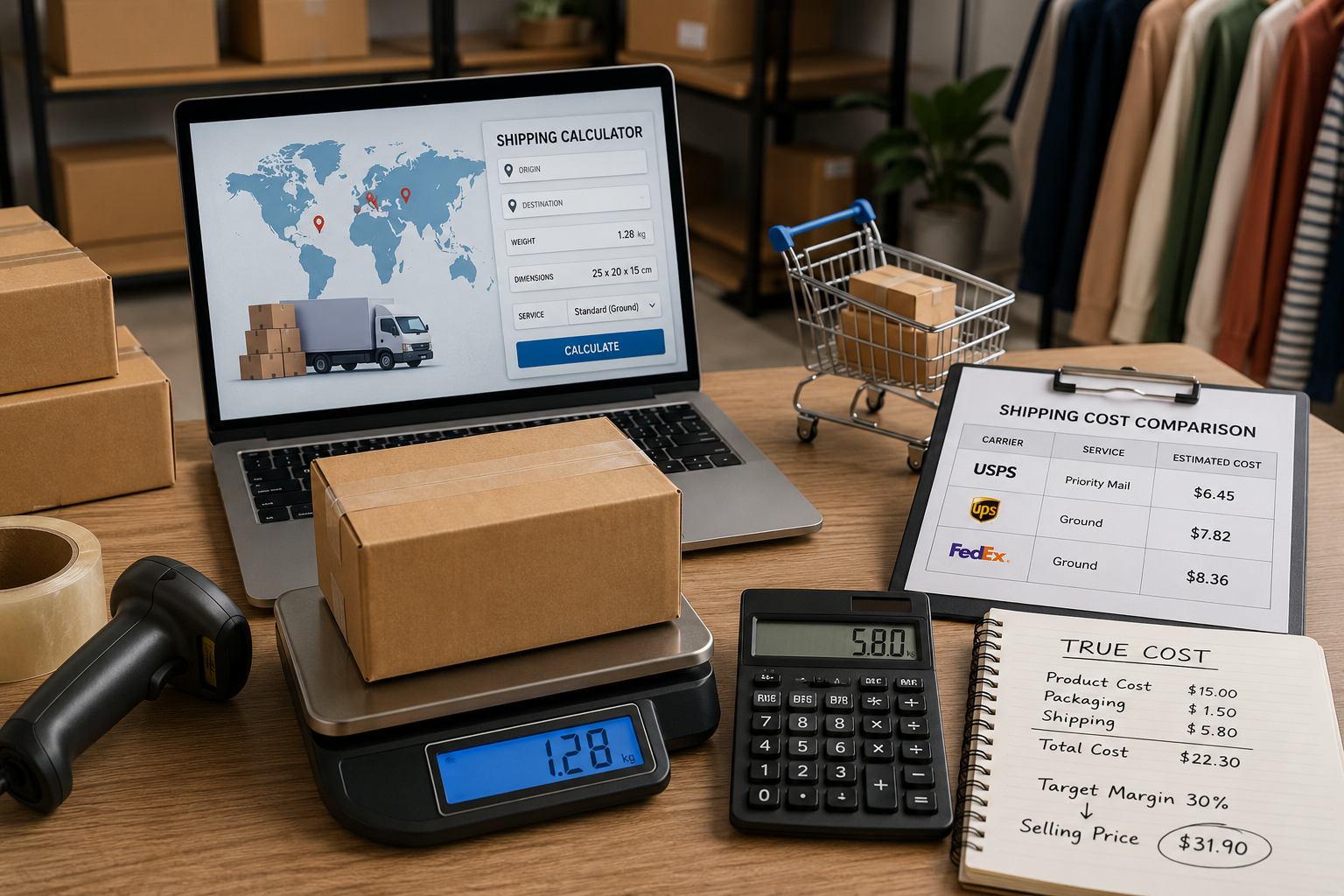
How to Use a Shipping Cost Calculator to Build Smarter E-Commerce Pricing Strategies (Step-by-Step Guide)
Shipping costs are one of the biggest hidden factors affecting e-commerce profit margins, yet most businesses ignore them until it’s too late. This guide shows how a shipping cost calculator can help you accurately estimate delivery expenses before setting prices, allowing you to build smarter, more profitable pricing strategies. By integrating real shipping data into your pricing model, you can avoid margin loss, stay competitive, and make data-driven decisions that scale your online store with confidence.
Everyone starts a budget with the best intentions. You open a spreadsheet, list your income, assign spending limits – and within a week, it falls apart. Sound familiar?
Budgeting failure isn’t about intelligence or willpower. It’s about a fundamental gap between how we plan to spend money and how we actually spend it in the moment. Research in behavioral finance consistently shows that humans are wired to prioritize immediate comfort over future financial goals – a pattern that turns even the most carefully designed budget into an abandoned document.
Most budgets collapse within the first 7–10 days – not because people lack discipline, but because traditional budgeting ignores the emotional, impulsive nature of real-world spending. When emotions drive decisions – stress, boredom, social pressure – no spreadsheet can compete.
The good news? This isn’t a math problem. It’s a behavior problem. And behavior problems have behavioral solutions.
The Psychology Behind Budgeting Failure (Behavioral Finance Explained)
Understanding why budgets fail is the first step to fixing them. Behavioral finance – the study of how psychology shapes financial decisions – reveals four key culprits:
Present Bias is the tendency to prefer smaller rewards now over larger rewards later. When you’re tired after work and someone suggests ordering takeout instead of cooking, your brain chooses the immediate comfort – despite the budget saying otherwise. Future-you always loses to present-you in this battle.
Mental Accounting Errors occur when we treat money differently depending on where it came from. A tax refund feels like “free money” and gets spent carelessly, even though it’s the same money you earned all year. This inconsistency creates invisible holes in any budget.
Decision Fatigue sets in when manual tracking turns every purchase into a mental task. After dozens of small spending decisions throughout the day, the willpower to log expenses – and resist impulse buys – simply runs out.
The Pain of Paying effect means that paying with cash feels more “real” than swiping a card or tapping a phone. Digital payments reduce the psychological friction of spending, making it far too easy to exceed budget limits without feeling it.
5 Hidden Reasons People Can’t Stick to a Budget
Most budgeting advice focuses on what to do – not why it stops working. Here are five underrated reasons budgets fall apart:
1. Overcomplicated Budgeting Methods The more categories, rules, and sub-accounts a budget has, the harder it is to maintain. Complexity creates friction, and friction leads to abandonment. Most people need simplicity, not sophistication.
2. Unrealistic Expense Categories Setting a grocery budget of $200/month when you consistently spend $350 doesn’t motivate you – it demoralizes you. Budgets built on wishful thinking rather than real spending history are pre-programmed to fail.
3. Ignoring Small Daily Purchases A $4 coffee, a $2 parking fee, a $6 snack – these feel trivial individually. But $12–$15 per day adds up to $400+ per month in untracked “invisible spending.” The budget never accounts for it, so it always ends up in the red.
4. No Real-Time Tracking System Reviewing spending at the end of the month is like checking your fuel gauge after you’ve already run out of gas. By the time you see the problem, the damage is done. Without live visibility into spending, overspending is inevitable.
5. Lack of Visual Feedback Numbers in a spreadsheet don’t trigger emotional responses the way visual charts do. When people can see how much they’ve spent in a category – as a gauge, a bar, a color – they react. Text alone doesn’t change behavior.
Why Traditional Budgeting Methods Fail in 2026
In 2026, the way people spend money has fundamentally changed – but most budgeting tools haven’t caught up.
Spreadsheet Fatigue is real. Maintaining a detailed budget spreadsheet requires consistent data entry, formula management, and monthly reconciliation. For most people, this becomes a part-time job they quickly quit.
Manual Entry Burnout is the single biggest reason people abandon budgets. Every receipt, every transaction, every cash payment needs to be logged. Miss a few days? The whole system becomes unreliable and gets abandoned entirely.
No Automation or Alerts means traditional budgets are reactive, not proactive. You find out you overspent on dining – after you’ve already overspent. There’s no system in place to warn you before you hit the limit.
The Outdated Monthly-Only Approach treats finances as something you review once a month – but spending happens every day. A once-monthly review can’t identify problems fast enough to change behavior. Financial awareness needs to be continuous, not monthly.
How an Expense Tracker Fixes Budgeting Instantly
An expense tracker doesn’t just record spending – it transforms the relationship between you and your money. Here’s how:
Real-Time Expense Visibility Eliminates Guesswork Instead of estimating how much you’ve spent this month, you know – down to the last rupee or dollar – at any moment. This awareness alone is enough to reduce overspending by making every transaction feel deliberate.
Automatic Categorization Reduces Mental Load When every transaction is automatically sorted into the right category, you eliminate decision fatigue. There’s no manual logging, no forgotten receipts, no end-of-month surprises. The system works while you live your life.
Alerts Prevent Overspending Before It Happens Smart budget alerts notify you when you’re approaching a limit – not after you’ve crossed it. This shifts budgeting from a reactive habit to a proactive one, giving you time to adjust before damage is done.
Behavioral Feedback Loop Improves Spending Habits When you consistently see patterns – “I spend 40% of my dining budget in the first week of the month” – you naturally start correcting them. The tracker creates awareness; awareness creates change.
Discount Calculator
Enter any original price and a discount percentage to instantly see your final price, exact savings, and whether the deal is genuinely worth it.
Behavioral Finance in Action: How Tracking Changes Spending Habits
The most powerful feature of any expense tracker isn’t its interface – it’s the psychological shift it creates.
Instant Feedback Rewires Spending Decisions When your tracker shows you’ve spent $180 of your $200 dining budget on the 15th of the month, you feel it differently than reading a number in a spreadsheet. The visual context makes the data emotionally meaningful – and that drives action.
Visualization Reduces Impulsive Purchases Studies in behavioral economics show that people spend significantly less when they can visualize their remaining budget. A nearly-full spending gauge activates a different mental response than a number like “$20 left.”
The “Awareness Effect” Surprises Even Careful Spenders One of the most common reactions from first-time tracker users is: “I didn’t realize I was spending this much on that.” Subscriptions, convenience fees, impulse snacks – none of it felt significant. Seeing it aggregated is often a turning point.
Small Habit Corrections Compound Over Time You don’t need to overhaul your lifestyle to see results. Catching a $50/month subscription you forgot about. Reducing weekend spending by 20%. Cooking at home one extra night per week. Small, data-driven adjustments compound into thousands saved per year.
Expense Tracker vs. Traditional Budgeting – Quick Comparison
| Factor | Traditional Budgeting | Expense Tracker |
|---|---|---|
| Data Entry | Manual, time-consuming | Automated, real-time |
| Feedback Timing | End of month | Instant |
| Decision Basis | Memory and estimates | Actual spending data |
| Alerts | None | Proactive overspend alerts |
| Adaptability | Static (updated manually) | Dynamic, updates automatically |
| Behavior Change | Depends on discipline alone | Reinforced by data and visuals |
| Ease of Maintenance | High effort | Minimal effort |
The core difference is this: traditional budgeting asks you to remember and discipline yourself. An expense tracker does the remembering for you – and shows you the results visually, so behavior change happens naturally.
Real-Life Scenario: Before and After Using an Expense Tracker
Month 1 – Discovering the Leaks Sarah, a 28-year-old professional, thinks she spends around $400 on food each month. After connecting her accounts to an expense tracker, she discovers she’s actually spending $620 – $140 of it on food delivery apps she uses almost daily without thinking twice. She also finds three forgotten subscriptions totaling $45/month. Total monthly leak discovered: $265.
Month 2 – Category Awareness Creates Control With real spending data in front of her, Sarah adjusts – not dramatically, but deliberately. She limits food delivery to weekends only, cancels unused subscriptions, and sets a $500 food budget with alerts. Midway through the month, an alert fires. She adjusts. No overspend.
Month 3 – Consistent Savings Without Effort By month three, the behavior has become automatic. Sarah no longer needs to consciously think about her budget – the tracker handles visibility and alerts. She saves $230 more than she did three months ago. No willpower required. No spreadsheet maintained. Just awareness, automated.
Key Features of an Effective Expense Tracker
Not all expense trackers are equal. Here’s what separates a genuinely useful tool from one that collects dust:
Real-Time Syncing – Transactions should appear instantly or within minutes of occurring. Delayed syncing defeats the purpose of live awareness.
Smart Categorization – The tracker should accurately sort purchases (groceries, transport, dining, subscriptions) without requiring manual tagging for every entry.
Monthly Insights Dashboard – A clean summary view showing where money went, which categories ran over, and how this month compares to last month. Data is only useful if it’s presented clearly.
Budget Alerts and Limits – Proactive notifications when spending approaches or exceeds a set limit. The best trackers let you customize alert thresholds per category.
Visual Spending Breakdowns – Pie charts, bar graphs, and trend lines that make patterns immediately visible. Humans process visuals 60,000x faster than text – good trackers use this.
How to Start Using an Expense Tracker in 5 Minutes
You don’t need a financial degree or hours of setup. Here’s how to get started immediately:
Step 1 – Connect Your Income Sources Link your bank account, salary account, or payment apps. Most modern trackers offer secure bank integration with read-only access.
Step 2 – Set Simple Spending Categories Start with 5–7 broad categories: groceries, dining, transport, utilities, entertainment, shopping, and miscellaneous. Don’t overcomplicate it at the start.
Step 3 – Define Realistic Limits Look at your last 2–3 months of actual spending and set limits 10–15% below your average – not 50% below. Realistic limits stick; fantasy limits don’t.
Step 4 – Enable Alerts Set notifications at 75% and 100% of each category limit. The 75% alert is your early warning; the 100% alert is your final check.
Step 5 – Review Weekly Summaries Spend 5 minutes every Sunday reviewing the week’s spending. This habit, combined with daily alerts, keeps you financially aware without overwhelming you.
Final Thoughts – Budgeting Fails Because Humans Don’t Think in Numbers
Here’s the truth most financial advice ignores: budgeting is not a math problem. The math is simple. The behavior is hard.
We are emotional, impulsive, present-biased creatures making dozens of spending decisions every day under stress, distraction, and social influence. A spreadsheet can’t compete with that. Willpower has limits. Memory is unreliable. Discipline runs out.
Automation removes emotional friction. When the tracking happens automatically, when the feedback is visual and immediate, when alerts fire before damage is done – the system works with human psychology instead of against it.
Start with one tracker. Set five categories. Enable two alerts. Review once a week. That’s it. Small, consistent tracking habits compound into long-term financial control – not through restriction, but through awareness.
The budget doesn’t fail because you do. It fails because it wasn’t built for how humans actually behave. Now you can fix that.
Frequently Asked Questions
A shipping cost calculator eliminates guesswork by providing accurate delivery cost estimates based on package dimensions, weight, carrier, and destination zone. Without one, businesses frequently underprice products – absorbing shipping losses silently – or overprice and lose customers to competitors who’ve done the maths properly. Used at the pricing stage rather than the checkout stage, it’s the most effective tool for building margin accuracy into your e-commerce business from the start.
At minimum quarterly. Most major carriers – UPS, FedEx, USPS – publish annual general rate increases (GRIs) in January, with fuel surcharge adjustments on a monthly basis. If you’re using a dynamic calculator connected to live carrier APIs, updates happen automatically. If you’re entering rates manually, set a calendar reminder for post-January and each quarter thereafter.
Neither is universally better – it depends on your average order value, product margins, and customer geography. A shipping cost calculator helps you model both scenarios accurately: what free shipping threshold maintains your target margin, versus what transparent shipping charge at checkout preserves the customer relationship without surprising them. Most businesses benefit from a free shipping threshold set using actual calculator data, rather than a round-number guess.
Especially small businesses. Large retailers can absorb shipping losses across high order volumes. Small businesses with tighter margins cannot. A shipping calculator levels the playing field by enabling the same data-driven pricing decisions that large operations make – without requiring a logistics team, enterprise software, or significant investment. The tool is free; the margin protection it provides is significant.
Our Process
How it Works
Three steps to an honest deal verdict.
How Inflation Is Changing Online Shopping Behavior Worldwide
Popular Right Now
Featured Calculators
Discount Calculator
Enter any original price and a discount percentage to instantly see your final price, exact savings, and whether the deal is genuinely worth it.
Deal Value Checker
Don't just see the % off — get a deal score from 1–10 and a clear verdict: Worth It, Average, or Bad Deal. Stop getting fooled by inflated "original" prices.
About Author

nazneen
Kitchen Chronicles
When it comes to everyday messes, you need a paper towel that’s strong, absorbent, and cost-effective.
Some of Our Top Posts



Populaar Tools

Selected For You
Related Posts
Start Saving Money
in Seconds
Join 10,000+ shoppers using Daily Discount Hub to spend less and live better.
Pick a tool and find out how much you can save right now. Make better spending decisions starting today.